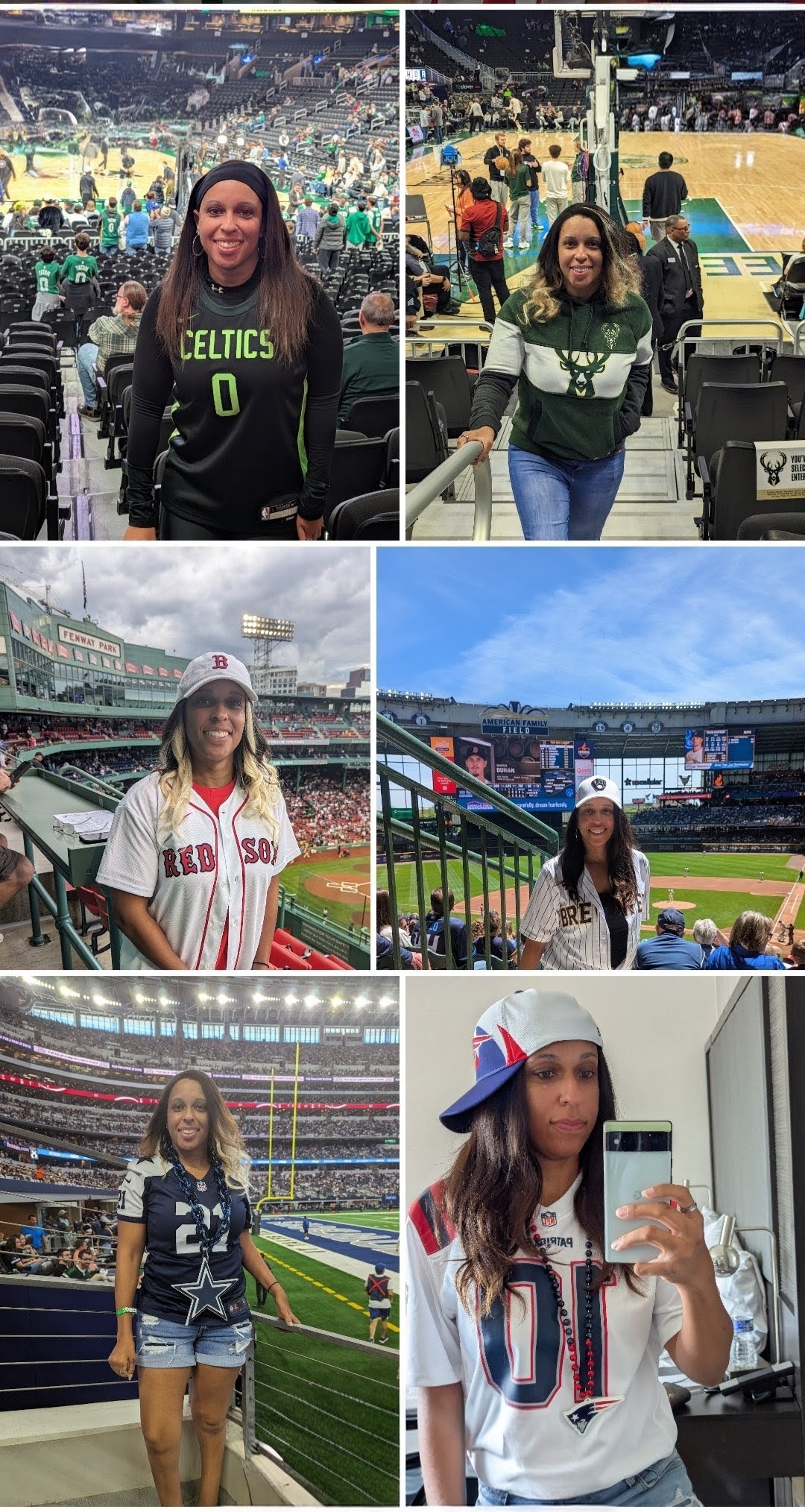
The Psychology of Rooting for More Than One Team

I have a confession that seems to bother a surprising number of people.
I root for both the Boston Celtics and the Milwaukee Bucks. I cheer for the Boston Red Sox and the Milwaukee Brewers. I bleed Scarlet and Gray for college football while Duke hold the space in my heart for college basketball. Whenever someone learns this, I usually receive the same reaction: confusion. Depending on who you ask, this makes me strange, disloyal, or not a “real” fan at all.
“How can you support both?”
The question has always intrigued me. Not because I struggle to answer it, but because it reveals how differently people view sports fandom.
Many fans see sports loyalty as an exclusive commitment. You pick a team, plant your flag, and stay loyal for life. Supporting multiple teams is often viewed as suspicious, disloyal, or even impossible.
But why?
The answer may have less to do with sports and more to do with human psychology.
For many people, supporting a team is not merely entertainment. It is part of their identity.
Psychologists refer to this concept as social identity. We naturally define ourselves by the groups to which we belong. We identify with our families, professions, communities, and social circles. Sports teams often become another extension of that identity.
For a lifelong Boston fan, the Celtics are not simply a basketball team. They represent home, tradition, memories, and community. The same can be said for a Packers fan in Wisconsin, a Yankees fan in New York, or a Buckeyes fan in Ohio.
This helps explain why sports evoke such powerful emotions. When our team wins, we feel pride. When our team loses, we feel disappointment. In many cases, criticism of the team can feel oddly personal because the team has become intertwined with our sense of self.
The problem arises when people assume identity must be singular.
Human beings rarely define themselves by one thing. We are professionals, friends, parents, children, artists, volunteers, and countless other things simultaneously. We navigate multiple identities every day without conflict.
Why should sports fandom be any different?
Perhaps supporting multiple teams is not a contradiction at all. Perhaps it simply reflects the complexity of modern identity.
Not all fans experience sports in the same way.
Some fans are identity-driven. Their connection is rooted in geography, family tradition, or community. Their team represents where they come from and who they are.
Others are narrative-driven.
They are drawn to stories.
They appreciate the history of a franchise, the personalities of players, the culture surrounding a team, and the unique journey each organization takes. They are captivated by dynasties, underdogs, redemption arcs, and moments that become part of sports history.
As a writer, I find myself drawn to this side of fandom.
Every team tells a different story.
One franchise may embody tradition and excellence. Another may represent perseverance and resilience. One team may remind us of our childhood, while another may be connected to a different chapter of our lives.
Appreciating multiple stories does not diminish our connection to any one of them. It simply means our interests are not confined to a single narrative.
What fascinates me most is that sports seem to be one of the few areas of life where people demand exclusivity.
No one expects us to have only one favorite musician.
No one expects us to enjoy only one genre of books.
No one expects us to visit only one city or maintain only one meaningful friendship.
Yet sports fans often treat loyalty as an all-or-nothing proposition.
The reason may lie in our tribal instincts.
Humans naturally divide the world into groups. Throughout history, belonging to a group improved our chances of survival. Even today, we instinctively create categories of “us” and “them.”
Sports provide a socially acceptable outlet for those instincts. Rivalries, competition, and team loyalty all tap into that deeply rooted desire to belong.
As a result, many people unconsciously view fandom as membership. If you belong to one group, they assume you cannot belong to another.
But the modern sports landscape challenges that assumption.
Previous generations typically followed local teams because those were the only teams available to them. They watched local broadcasts, read local newspapers, and attended local games.
Today, geography matters far less.
A fan in Ohio can watch games from Boston, Milwaukee, Los Angeles, and Seattle with equal ease. Social media allows fans to follow players, coaches, and teams from anywhere in the world. People develop connections to cities they have never visited and organizations they may never see in person.
The opportunities for attachment are virtually limitless.
Perhaps supporting multiple teams is not unusual at all. Perhaps it is simply a natural consequence of living in a world where sports are no longer confined by geography.
There is another reason people support multiple teams, and it may be the most important one.
Sports teams often become emotional landmarks.
Sometimes we do not love a team because of the logo on the jersey. We love what that team represents in our personal history.
A team can remind us of childhood afternoons spent watching games with family. It can remind us of college years, lifelong friendships, a favorite player, or a period of life we cherish.
Those emotional connections are powerful.
When someone asks a fan to choose between two teams, they may unknowingly be asking them to choose between two meaningful chapters of their life.
That is not always possible.
And perhaps it should not be.
At its core, sports are supposed to bring joy. They connect us to stories, communities, memories, and experiences. They give us something to celebrate, debate, and share with others.
For some people, that connection comes through a single team.
For others, it comes through several.
Neither approach is right or wrong.
The bigger question may be why we are so uncomfortable with people belonging to more than one thing.
Sports are often a reflection of life itself. We like categories. We like simple labels. We want people to fit neatly into boxes.
But real life is rarely that simple.
People can love multiple places.
People can feel connected to multiple communities.
People can carry multiple identities.
Maybe rooting for more than one team is not a sign of confusion.
Maybe it is simply an acknowledgment that our lives are shaped by more than one story.